August 23, 2010

Back Fracture Verdicts

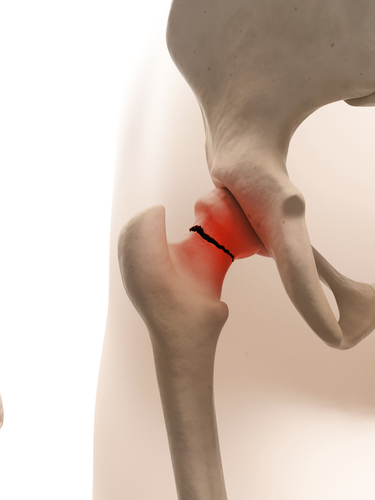
This month, Metro Verdicts Monthly graphs the median verdict and settlement value of back fracture cases over the last 23 years. The median settlement/verdict in Washington D.C. is $52,500. Maryland has a slightly lower median of $43,126. The median settlement/verdict in a back fracture lawsuit in Virginia is $125,000. These are back fracture cases where there is no paralysis.

Most back factures come from some sort of trauma, usually from a car accident or falling. The reason the numbers may sound lower than you are might expect is because many back fractures are not as serious as the ominous sounding "back fracture" would suggest. When I was in high school, I hurt my back swinging a baseball bat at baseball camp in Florida. A chiropractor worked on me for a while but I made no progress. I went to an orthopedic doctor and, low and behold, I had a fractured back. It ruined my baseball season and I had to wear a back brace for eight weeks but I never suffered any ill effects after removing the back brace.

Continue reading "Back Fracture Verdicts" »

| Share
June 14, 2010

Foot Injury Lawsuits: Settlements and Verdicts

Obviously, there are a lot of vexing injuries that occur in car and truck accidents. Foot and ankle injuries rank high on this list of hard to solve accident injuries. There are so many bones in the foot and the bones are so small. Just too many things can go wrong.

According to a Jury Verdict Research study, the overall median jury award for foot injuries is $98,583. More serious foot injuries see a corresponding rise in value. Multiple fractures to a foot increase the median verdict to $144,000. In foot injury cases where both feet are fractured, the median rises to $296,940. For plaintiffs' lawyers repeating the "scope property damage does not matter" credo, it is hard to ignore the conclusion that if you have suffered fractures to both of your feet, you were most likely in an extremely serious accident.

Another Jury Verdict Research study found that 39% of the foot injury cases that went to verdict were suffered in auto, truck or motorcycle accidents. A remarkable 11% of serious foot injury cases were in motorcycle accident cases. This stat underscores how dangerous motorcycles are compared to cars or trucks.

One thing I really suggest in foot injury cases is finding an accomplished doctor with a focus on foot and ankle injuries. Baltimore is uniquely blessed in world renowned foot surgeons. If you have an orthopedic problem with your foot - from a car accident or anything else - take advantage of the abundance of riches we have and get yourself someone extremely well-qualified to chart the best path to recovery for you.

| Share
February 10, 2010

Car Accidents Cases Involving Turning Vehicles

One of the most difficult decisions an accident lawyer has to make is whether to take a case with fatal or catastrophic injuries where there is a significant dispute in liability - typically he said/she said.

Nothing you read in this blog post is going to make that decision for you. In these cases, most of the ballgame is witness credibility and the intricate details of how the accident happened (which, parenthetically, I think most juries get right). But it does not hurt accident lawyers to inform this case specific decision making process with a little bit of data.

Jury Verdict Research this month published data on the success rates in turning car accident cases, defined as vehicle accidents between parties traveling on the same road in either the same direction or opposite directions. These are the recovery probabilities by type of turning case:

Parties Traveling on Same Road in Opposite Directions: 61%
Defendant Turning Left: 66% (I'm surprised it is this low)
Plaintiff Turning Left: 44% (I'm surprised it is this high)
Defendant Turning Right: 43%
Plaintiff Turning Left: 52%
Plaintiff Turning Right: 34%

The lesson? It helps to represent the party that is not making a turn.

The average jury verdict in turning collusion cases is $156,472 which is inflated by large verdicts, including one for $35,835,684 that was included in the study. The median jury verdict in car accident turn cases is only $14,000. Two percent of the verdicts in these cases exceeded $1 million.

| Share
December 14, 2009

Settlement Mill Law Firms and Settlements

Nora Freeman Engstrom writes an amazing article for the Georgetown Journal of Legal Ethics titled Run-of-the-Mill Justice. She writes about settlement mill law firms, writing with a 60 Minutes investigative journalism style that names names, calling out a few law firms she has labeled as settlement mill firms. Engstrom characterizes these firms as "characterized by their high claim volume, aggressive advertising, significant delegation to non-attorneys, entrepreneurial focus, and quick resolution of claims, typically without initiation of suit."

There are about 10 different facets of the article I find interesting. I found of particular interest the idea that settlement mills create a "one size fits all" (my words, not hers) kind of justice. Under this system, individualized pain and suffering does not exist for settlement purposes.

What matters, then, for car accident settlement purposes in non-serious injury cases is the amount of the medical bills, what the injuries are, and how much damage was done to the vehicles. Plaintiffs' car accident lawyers have blamed this on a paradigm shift in the thinking of insurance companies in the 90s, This article argues, quite convincingly, that many plaintiffs' lawyers are unindicted co-conspirators in this system.

The author overlooks that settlement mill auto accident law firms are just one contributing cause. The opposite extreme is equally to blame, lawyers who have very small practices and no real marketing presence that do that exact same thing. Take the case, send in the medical records and bills, and settle the case for whatever you can. There are tons of local lawyers parading as lawyers suited to handle car accident claims. The bigger problem? These same lawyers get serious injury accident cases, typically car accidents, where the victim's financial future is at stake. These lawyers take the case because they can't resist and the results are often disastrous. Settlement mill law firms often have the good sense to refer these cases out, realizing they are asking for a legal malpractice lawsuit. Often, the guy with the office on the corner that does wills, criminal, domestic, and everything else under the sun does not have this same sense.

Of course, it is a mistake to label every solo general practitioner as incompetent to handle large auto accident cases just as it is a mistake to assume every firm that runs massive amounts of television commercials as settlement mills.

What is a good plaintiffs' auto accident lawyer to do if he does not want to get caught up in this mess that has been created? If you have a client who wants to settle their auto accident claim quickly and at any price, you are going to be a victim of this system. There is no way out. But if you have a client that wants to maximize the value of their case, there is a simple answer: file suit and request a jury trial. The insurance company is either going to pay at least a reasonable value on the claim or it is going to go to trial where a jury is going to give you the fair value of the case. Because a jury is the ultimate definer of the fair value of a case.

November 10, 2009

Personal Injury Statistics

While not as fun as, say, baseball statistics in the pre-steroids era, I really do enjoy looking at statistics on personal injury lawsuits. The Department of Justice just released a new report on personal injury lawsuit statistics (which I found via TortsProfBlog). The data, as always with this stuff, is older - 2005. But it is still incredibly interesting. Here is a sampling:

  • Personal injury lawsuits accounted for about 60% of the estimated 26,948 tort, contract, and real property cases. The big venues are trying less cases. The number of personal injury lawsuits conducted by state courts in our 75 most populated counties declined approximately a third from 10,278 trials in 1996 to 7,038 trials in 2005.
  • Verdicts are down a bit, but not much is changing. The median damage awards garnered by plaintiffs in personal injury lawsuits declined from $38,000 in 1996 to $31,000 in 2005. Personal injury plaintiffs prevailed from 1996 to 2005 consistently about half of the time. The percentage of plaintiffs prevailing in automobile accident cases increased a bit from 58% in 1996 to 61% in 2005, but medical malpractice lawsuits became less successful: medical malpractice plaintiffs won in 19% of malpractice lawsuits in 2005 and 23% in 1996.
  • Nearly 60% of tort trials were auto accident lawsuits.
  • Approximately 15% of tort trials were medical malpractice lawsuits. It takes six days to try the average malpractice lawsuit.
  • Approximately 5% of tort trials were product liability lawsuits. Of the product liability lawsuits that went to trial, plaintiffs prevailed in about 40%.
  • An amazing 25% of product liability lawsuits are either asbestos claims or other toxic tort lawsuits.
  • Judges found for plaintiffs in 56% of tort trials, while juries ruled in favor of plaintiffs in 51% of tort trials.
  • Plaintiffs prevailed in less than a quarter of lawsuits involving medical malpractice, non-asbestos (other) product liability, and false arrest or imprisonment trials.
  • During 2005, plaintiff winners in tort trials in the national sample were awarded an estimated
    $3.6 billion in compensatory and punitive damages (not shown in a table). The overall median final award of $24,000 in jury trials and $21,000 in bench trials did not differ statistically.
  • Continue reading "Personal Injury Statistics" »

    | Share
October 26, 2009

Juror Questions

I once had a jury ask the judge to see my damage exhibits in a case where I had asked for over $800,000. We all knew what that meant: Plaintiff's verdict. The judge gently chided the defense lawyer for making no offer in the case. I took a deep, satisfied breath with confidence that a jury verdict was imminent.

Because of how I'm leading the story, you know what happens next. The jury came back with a defense verdict.

So, I take with more than a few grains of salt any question that a jury has during deliberations. The Sacramento Bee reports that jurors in a wrongful death case in Sacramento asked for an adding machine that went up to ten digits.

In spite of my story above, I would still view this as a favorable sign for Plaintiffs.

| Share
October 2, 2009

Medical Malpractice Lawsuits and Malpractice Premiums

In response to a call from one doctor for medical malpractice reform in Montana, Thomas C. Bulma, a Missoula lawyer, points out the following facts:

  • Only one Montana dentist has been the subject of a lawsuit in Montana in the past 10 years. The dentist prevailed.
  • Only one podiatrist was sued. The podiatrist prevailed.
  • There have been 24 medical malpractice trials in Montana in the last 10 years. Ten years.
  • Plaintiffs in Montana have won 5 medical malpractice cases in the last 10 years.

Let's play along and agree that medical malpractice premiums are going through the roof in Montana. We should place blame for this on medical malpractice lawyers? What exactly is a Montana dentist or podiatrist paying in malpractice premiums given the one lousy claim in the last ten years. Exactly how much of those premiums are "administrative costs" (which include profit)?

| Share
August 24, 2009

Little League Lawsuits

There is good article on lawsuits involving Little League teams (and participant sports generally) in LawyersUSA this morning which includes a number of quotes from me.

| Share
August 5, 2009

Disc Injuries: Settlement and Trial Value Aid

Jury Verdict Research provides some incredibly interesting data this month on a topic of great interest to accident lawyers: disc injuries. Eighty percent of disc injuries that go to trial are from injuries suffered in auto/truck/motorcycle accidents. The median verdict in a disc injury case is $50,000. The average disc injury verdict is $340,328, which includes the 7% of disc injury cases where the award exceeded $1 million.

Many disc injury cases are complicated by either a preexisting injury or because of degenerative disc disease. (Defense lawyers blame spondylosis for just about everything, even if the plaintiff had never had so much as a back ache prior to the accident.) For degenerative disc disease injury, the average jury award is $51,678 ($11,482 median). For aggravation of preexisting disc injuries, the average award is $152,932 ($29,379 median).

The difference in the values between bulging/protruding disc versus a herniated or ruptured disc was rather pronounced. For bulging/protruding discs, the average jury award was $140,311 ($31,000 median). The average jury award for herniated or ruptured discs was $413,917 ($60,000 median).

Obviously, you cannot extrapolate from this data the settlement or trial value of an individual accident case. But seeing relative data for different types of disc injury cases does provide at least a small piece of the complex puzzle of valuing disc injury cases claims.

| Share
July 21, 2009

Maryland’s Cap on Damages in Lead Paint Cases

The Maryland Court of Appeals has two big cases in 2009 – one a lead paint case, the other a medical malpractice claim - in which plaintiffs seek a path around Maryland’s non-economic damages cap after big jury verdicts. Plaintiffs lost Round 1 today.

In Green v. NBS, Plaintiffs’ lead paint lawyers argued that the statutory cap on non-economic damages in Maryland does not apply to personal injury claims authorized by the Consumer Protection Act. Specifically, and creatively, Plaintiffs claimed that a lawsuit brought under the CPA is not a “personal injury action” and the Maryland legislature did not want a cap on deceptive practiced covered by the CPA.

The Maryland high court, however, found that Plaintiffs’ CPA claim is a personal injury action, and that CJ § 11-108 is applicable to a proceeding in which a consumer asserts a claim for money damages to compensate for injuries sustained as a result of a Consumer Protection Act violation. The court’s reasoning is, essentially, that if it looks like a personal injury claim and talks like a personal injury claim, then it is a personal injury claim.

Plaintiffs’ lawyers made two other arguments. The first was DOA: the cap violates the Maryland constitution. Again, Plaintiffs’ lawyers tried to put a CPA spin on the old argument, arguing that a cap on a CPA claim violates the prohibition against the enactment of “special laws” in the Maryland Constitution. But the argument went nowhere with the court.

Continue reading "Maryland’s Cap on Damages in Lead Paint Cases" »

| Share
June 29, 2009

Wrist Fracture Verdicts and Settlements

Metro Verdicts Monthly graph this month is the median verdict and settlement value of wrist fracture cases over the last 22 years. The average settlement/verdict in Washington D.C. is $105,000. Maryland is less than half that: $50,000. The average settlement/verdict in a wrist fracture case in Virginia is $52,583.

Maryland jury verdicts in series personal injury cases are generally higher in the District of Columbia. Again, I don't know the methodology of how MVM gets its numbers. If they rely on personal injury lawyers reporting that data - which I do not think they do - then that could possibly skew the data as could a lot of other things that only a statistician could find. Particularly since Metro Verdicts includes settlements in their statistics, it is hard not to suspect that data could be skewed. The only way auto accident settlements (as opposed to malpractice settlements that have to be reported) get on the radar screen is if you call Metro Verdicts and tell them you settled a case. But there are few sources of verdict and settlement statistics in personal injury cases so it is hard not to find data like this interesting. I would love to see a jurisdiction comparison of Baltimore City and all of the counties in Maryland.

| Share
June 4, 2009

Personal Injury Jury Verdicts and the Recession

Michigan Lawyers Weekly published an article titled “Populist juries side with plaintiffs.” (No web link available.)

This title got my attention because I have been speculating about the impact our economic troubles are having on jury verdicts. The thesis of the article appears to be that juries are more likely to side with plaintiffs in this economy, but are less likely to give large damage verdicts. Although, it quotes one lawyer saying he got a larger verdict than he asked for, which he attributed to the economy.

Unfortunately, the article is just anecdotes from plaintiffs’ personal injury lawyers who have recently received good verdicts. This is not exactly the target audience for a fair look at the issue. The lack of hard evidence is not the fault of Michigan Lawyers Weekly. The economy really turned in October with the meltdown in the financial markets, and there is just not a lot of data since then that has been collected and analyzed.

Continue reading "Personal Injury Jury Verdicts and the Recession" »

| Share
June 1, 2009

Cerebral Palsy Verdict in Frederick

The Maryland Daily Record reports that a Frederick County jury awarded nearly $4 million to a boy in a malpractice lawsuit claiming the child’s cerebral palsy was caused by his doctors’ failure to properly monitor his heartbeat before delivery. The jury’s verdict was against an ER doctor and an obstetrician. Three nurses, a third doctor - another ER doctor - and Frederick Memorial Hospital were not found liable.

The nature of the claims for at least two of the doctors (I’m not sure of the claims against the third who was not held responsible) that were allegedly a substantial contributing factor in the child’s cerebral palsy were different. The emergency room doctor was ostensibly told of the concern about the mother at 5:45 a.m. but did not see or evaluate her. The obstetrician allegedly was told about the concerns with the patient at 7:00 a.m. but did not see her or order that she be sent to labor and delivery.

Yet all three doctors were represented by the same malpractice lawyer. As I have written before, Defendants’ lawyers are moths to the flame of presenting a united front against Plaintiffs. But I would think that the obstetrician would have liked to say, “No one did anything wrong but, sure, I relied on part on the fact that I assumed the ER doctor would have looked at the problem if there were immediate concerns.”

Now, that exact defense might be inapplicable to the facts of this malpractice case but some derivative version of that defense is almost invariably applicable when a medical malpractice lawsuit makes allegations against different doctors. Again, I do not know all of facts and there could certainly be other facts present in this cerebral palsy case that would make one malpractice lawyer handling the claims of all three doctors an understandable strategy. This is obviously Monday morning quarterbacking after a bad medical malpractice verdict - which is incredibly easy to do. The malpractice lawyer who represented the doctors is considered one of the best medical malpractice lawyers in Maryland. But even if there are facts I don't know that would change my analysis in this case, the principle I am talking about still holds true: defendants are almost invariably better off having their own lawyer to at least give them the easy option of jumping ship on the "we are all in this together" boat.

Continue reading "Cerebral Palsy Verdict in Frederick" »

| Share
May 18, 2009

Vision Loss Settlement and Verdicts

Metro Verdicts Monthly graph this month is the median verdict and settlement value of “vision loss” personal injury cases. Omitting defense verdicts, the average settlement/verdict in Washington D.C. is $500,000. What do you think the average is in Maryland? Somehow, I doubt you would guess anything in the neighborhood or even the zip code of $192,700. The difference in these two numbers is inexplicable. The average settlement/verdict in vision loss cases in Virginia is $450,000.

I suspect something is wrong with this analysis because I really don’t think Virginia juries value vision loss twice as much as Maryland juries. I’d pay extra if they would include in an appendix the data they used for these graphs.

| Share
April 13, 2009

Value of Wrongful Death Cases in Maryland Where Victims Is 65 or Older

Lawyers handling wrongful death cases encounter an awful argument from defense lawyers in cases where the victim is 65 years-old and older: you have to discount the value of your claim because the victim was old, anyway. The argument is so callous no lawyer would directly make this argument to a jury, especially in a jurisdiction like Maryland where there is a meaningful cap on wrongful death and survival action damages.

The “victim was old anyway” argument is offensive and cold…but not, relatively speaking, entirely untrue. And once you get past how awful it sounds, the differences do make sense. The money damages awarded in a wrongful death claim with a young victim having 70 more years of expected life should be higher than with an older victim having only 20 more years of expected life because the victim's family will be without them longer and the victim missed out on a lot more life.

The reason why the argument is so offensive is not the underlying premise – older victims get less – but the “How big was the loss, really?” way in which it is pitched. The reality is that juries still place values on these losses. According to Metro Verdicts Monthly, juries have over the last 22 years awarded an average verdict in Maryland wrongful death cases of $1,337,824 involving victims 65 and older. Washington, D.C.’s average is slightly higher, $1,443,818. Incredibly, and this really underscores jurisdictional differences, Virginia’s average verdict in wrongful death cases involving victims 65 and over is an abysmal $685,535, less than half that of the District of Columbia.

Continue reading "Value of Wrongful Death Cases in Maryland Where Victims Is 65 or Older" »

| Share
November 11, 2008

Wrongful Death Verdicts for Minor Children: A Large Sex Based Difference in Verdicts

In wrongful death cases, the size of jury verdicts has always tilted in favor of men, which is why many have argued that caps on non economic damages are sexually discriminatory. In a new study, Jury Verdict Research offers a very different conclusion when comparing compensation in wrongful death claims between minor females and minor males. The median wrongful death of minor females is $1,912,349 but the median award for the wrongful death of minor males is $1,500,000. This gap increases when looking at average wrongful death verdicts. Minor females average $8,648,036 in wrongful death cases compared to an average of $3,173,360 for males.

I can’t explain this data or begin to offer a reason for it.

| Share
November 3, 2008

Chantix Lawsuits Are Up; Chantix Sales are Down

Chantix sales in this country have fallen 49% percent, Pfizer reported last week. However, internationally, sales jumped 60 percent. This report comes as the FDA said it may need to upgrade warnings on Chantix after increasing reports of road-traffic accidents and seizures involving people on Chantix. Chantix already has been linked to serious psychiatric side effects such as depression and suicidal ideations and behavior. Last year, the Chantix label warning was strengthened for suicide, although Pfizer claims that the symptoms are not from Chantix but from nicotine withdrawal itself.

In making the Fort Pinto, engineers discovered before the Pinto was placed into the market that rear-end collisions would rupture the Pinto's fuel system extremely easily. Although Ford owned a patent on a much safer tank, Ford made the cost-benefit analysis that compared the cost of an $11 repair against the cost of paying off potential lawsuits.

Ford put all of this in writing, leading to a spate of punitive damage awards. Naturally, no one puts this kind of stuff in writing anymore. That was the lesson of the Ford Pinto litigation.

But plaintiffs’ lawyers argue that the same unwritten calculus keeps drugs like Chantix, Seroquel, and Avandia on the market. The manufacturers of the drugs know the likelihood is that lawyers are going to continue to file lawsuits and these cases are going to eventually settle. The question is whether the costs of defending these cases and paying settlements and verdicts (not to mention the bad will that comes with every lawsuit) is worth the profits received from the drug.

Having said that, let me back step just a bit. I’m not suggesting that Chantix is the same thing as the Ford Pinto because not everyone at Pfizer believes that Chantix is a bad drug. I’ve defended a number of big pharmaceutical companies. I’m not suggesting everyone involved in the manufacturing of Chantix (or Serqouel and Avandia, two other heavily litigated drugs that are under siege and still on the market) are engaging in this raw, void of humanity, cost-benefit decision making process.

I know that within Pfizer there are decent people who believe in good faith that Chantix is a good drug because it is helping people quit smoking. (GlaxoSmithKline actually says Chantix is not efficacious, which is ironic because I’m grouping Glaxo’s Avandia in with Chantix). But if you think plaintiffs’ lawyers are biased, talk to the people who have staked out careers and reputations on the safety and success of a drug.

| Share
October 28, 2008

Larger Verdicts During the Holiday Season?

October’s Chicago Lawyer contains excerpts from an interview with John L. Kirkton, the editor of the Jury Verdict Reporter for the last 17 years.

One great myth debunked by Mr. Kirkton is the theory that jurors tend to give more around Christmas. Personal injury lawyers are always looking to schedule trials around Christmas and defense lawyers always try to avoid civil jury trials in December because they think the spirit of giving leads to more sympathetic jurors. The theory makes some anecdotal sense. Everyone seems to have just a little extra love in their hearts during the holidays.

Jury Verdict Reporter looked at December trials that were reported over the last four years in Cook County, Illinois and found that the plaintiff won between 47 and 50 percent of the time. For December trials, the plaintiffs’ success rate dropped to 44%.

I doubt Christmas has the scrooge effect with jurors; my guess is that the difference between December and the rest of the year in this survey was just a mild statistical anomaly. The study did not look at the size of the awards in December but my guess is they would get the exact same results: no difference.

The lesson of this study is that juries are trying to make the right call year round and the joy of the Christmas season does not alter their efforts. So lawyers on both sides should just schedule their trials whenever the lawyers and the witnesses are available because there does not appear to be a Christmas verdict bump.

| Share
October 10, 2008

The "Framing" of Personal Injury Lawyers and Tort Reform

I just finished George Lakoff’s book, Don't Think of an Elephant! Know Your Values and Frame the Debate. Channeling my inner Joe Biden, I loved the book; I hated the book.

I hated the book because as much as Lakoff obviously tried to fight it, he does too much of the “no reasonable person could think this way unless they were being manipulated” spiel. It is just too condescending and partisan for my tastes, which I think takes away from some of the luster of the book for me.

A topic near and dear to my heart, tort reform, is the classic example. Lakoff writes (on page 30 for those of you following along at home) that conservatives are not focused on tort reform because of their disdain for the volume of lawsuits, but because they want to take money out the coffers of progressives by taking away the attorneys’ fees available to trial lawyers. Obviously, medical malpractice and accident lawyers generally contribute heavily to progressive candidates.

The thought had never occurred to me that tort reform is a back door to bleed progressive causes and I’m sure there is some truth to it. But the notion that this is the primary source of the motivation for tort reform among conservative thinkers ignores the magnitude of the animosity in many circles of our society – including people smarter than me – with frivolous lawsuits and, to a lesser extent, large jury verdicts.

This problem is compounded by the repeating of verdicts that are completely taken out of context (the McDonald’s verdict), fabricated (the Stella Awards), or simply rare. Compounding this problem further is the fact that celebrities tend to use lawsuits as the resolution mechanism of first choice, leading Americans to assume that these de facto aliens are a microcosm of our country.

Lakoff suggests that trial lawyers need to frame the issues differently. Consumer protection and personal injury trial lawyers should be framed as public protection lawyers. Under this frame, when tort law tries to put a cap on non-economic damages, they are taking away the constitutional right of juries to decide justice. Large settlements and verdicts result in greater public safety because the impact of accident, malpractice and, most importantly in this context, products liability cases go beyond the case at hand and are a form of public protection law.

The problem goes beyond framing, though, because the real issue in the tort reform battle is that there are not enough people to make the frames. Trial lawyers are the wrong messengers. Trial lawyer lobbyists? Worse. So who is left?

The fuel that fills the tort reform train is that everyone on the ride has never suffered a catastrophic injury as the result of the negligence or willful disregard for their safety (typically consumer or med mal context) of someone else. Those folks who have suffered a catastrophic injury often do come forward and make compelling witnesses for the unfairness of many tort reforms, most notably caps on noneconomic damages. But most people who have suffered a grave injury have enough to deal with, without having to the carry the anti-tort reform ball. So that leaves a few compelling proponents against a lot of people who think that their insurance costs and what they pay for drugs and medical devices are due to greedy personal injury lawyers and their clients. And this is a hard obstacle to overcome.

| Share
September 23, 2008

State Farm

The Baltimore Injury Lawyer Blog last week published a comment written by a State Farm in-house counsel, issuing a rebuttal of sorts about a trial John Bratt tried against State Farm last month.

John's verdict in this case was 8 times the State Farm offer. State Farm's lawyer argued in his comment that it was not a big win for us because the jury only gave the plaintiff her medical bills. The crazy thing is that we agree. John did not view it as a big win, he asked for and was hoping for a lot more. But if we get a verdict that is 8 times the State Farm offer and both our lawyers and State Farm's lawyers think they won, what exactly does that say about the fairness of their offer? I think it calls into question the accuracy of the evaluations State Farm is making in Maryland accident claims.

The message, as always, for Maryland accident lawyers with claims against State Farm and other like minded insurance companies: try more cases.